

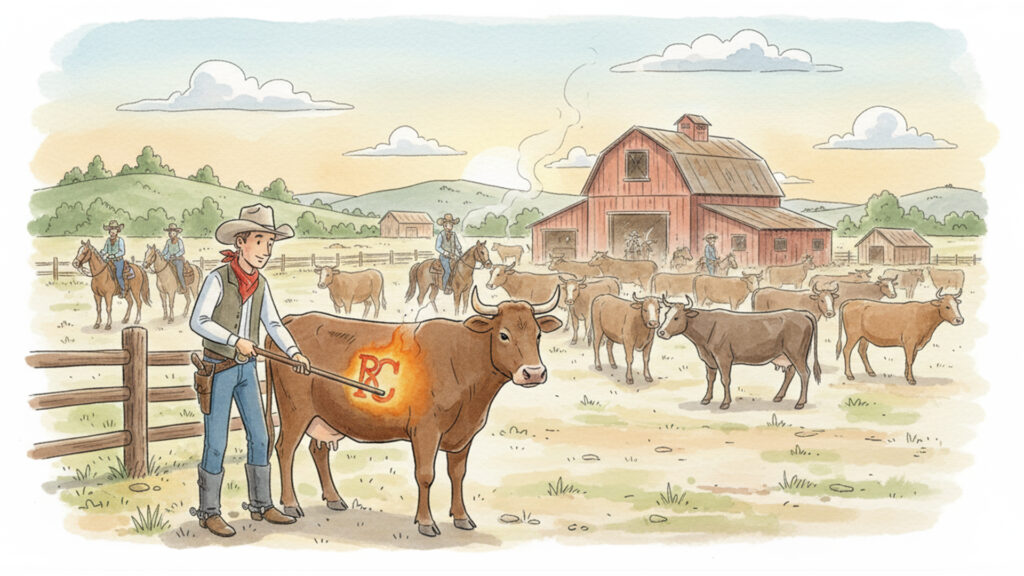
Interestingly, the word “brand” comes from the Ancient Norse word “brandr,” meaning “to burn.” In its earliest use, it referred to burning wood, and later, the practice of branding cattle to show ownership. What began as a literal mark of possession gradually evolved into a symbolic identity!
By the 1500s, branding was tied to ownership and recognition, but the real shift came centuries later. The Industrial Revolution of the 18th and 19th centuries transformed Europe and the United States, ushering in mass production. With more goods on the shelves and more choices for consumers, businesses faced a new challenge: how to stand out?
This need gave rise to trademarks—words, phrases, designs, and colours legally registered to protect ownership. By 1881, the U.S. passed its first Trademark Act, marking branding’s move into the realm of intellectual property.
The early 20th century then saw the birth of some of the world’s most iconic brands: Coca-Cola (1886), Colgate (1873), Ford Motor Company (1903), Chanel (1909), and LEGO (1932). These companies didn’t just make products—they crafted identities. Ford promised affordable innovation, Chanel redefined women’s fashion, and Coca-Cola bottled happiness.
Back then, there wasn’t much distinction between branding and marketing. Selling persistently was the only focus. But with the rise of media, brand awareness and mindshare became critical, shifting the perspective from simply selling products to building lasting connections. That’s where marketing came into play, gradually transforming how products were positioned and perceived.
Today, branding and marketing have branched into multiple disciplines. Yet, for many companies, especially startups, the line between the two is still blurry. This guide breaks it down so you can understand better and implement smarter. Let’s dive in:

What is Branding?
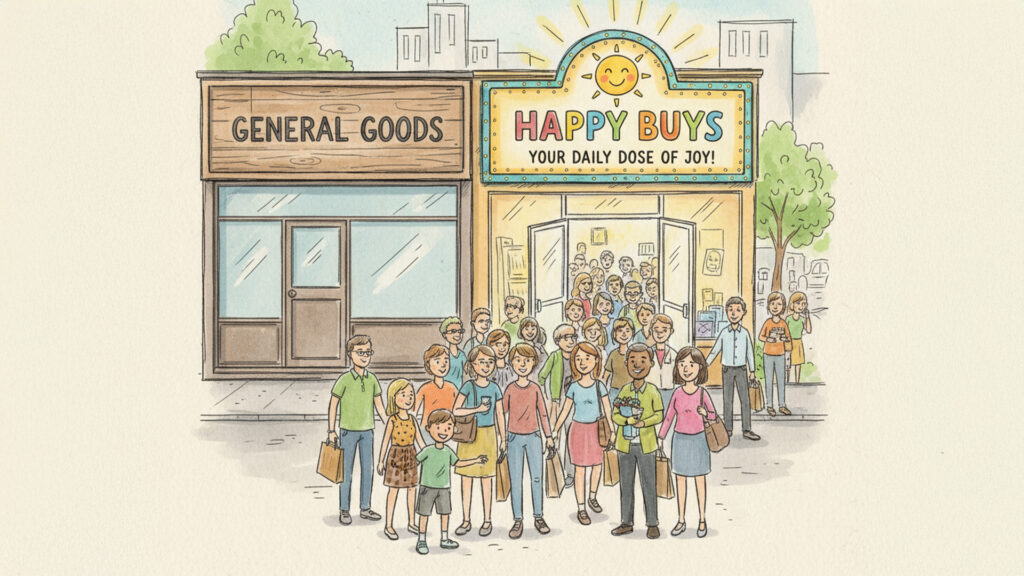
Branding is the identity and character of your business. It’s not just your logo or tagline—it’s the promise you make to your customers and the way you make them feel.
To understand branding, ask yourself:
- Who are we at our core?
- What do we stand for?
- What values do we want our audience to associate with us?
- How do we want people to describe our company?
- What emotions should our brand trigger when someone sees our name or logo?
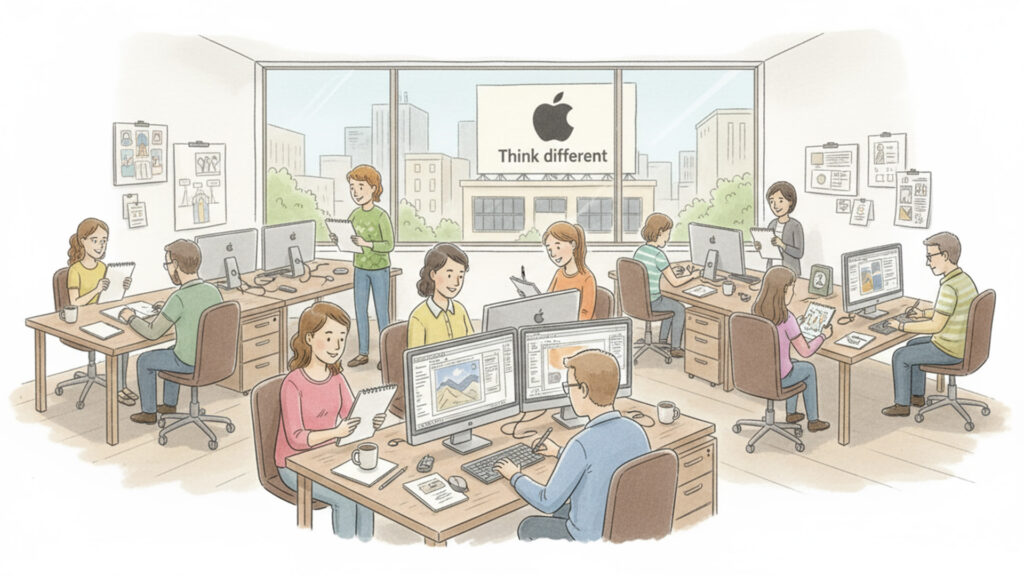
For example, when people think of Amul, they don’t just think of dairy—they think of trust, Indian nostalgia, and witty advertising. That’s branding. Take Apple for instance. Today, the brand stands for simplicity, friendliness in innovation while building exclusivity.
According to Lucidpress reports, consistent branding can increase revenue by up to 23%. This shows why branding is not an afterthought—it is the foundation on which long-term customer loyalty is built.
What is Marketing?
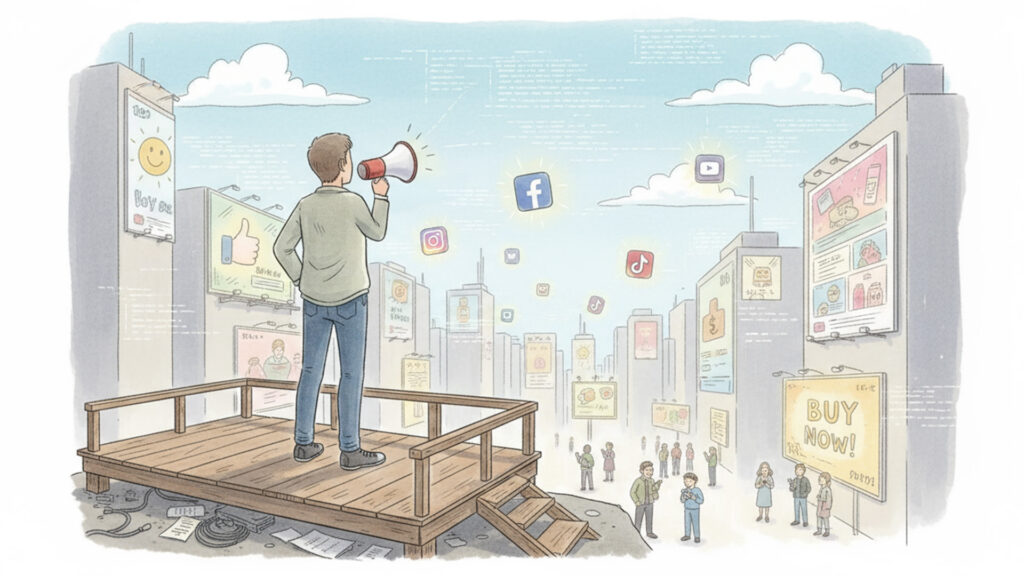
Marketing is about action and communication. It’s a calculative set of strategies and tactics one uses to shape a brand’s identity in a compelling way to the world and drive persuasion.
To understand marketing, ask yourself:
- How do we spread our brand message?
- Which platforms or channels are best to reach our target audience?
- What campaigns will convert awareness into actual sales?
- How do we measure success—leads, conversions, ROI?
- What stories can we tell that connect our brand identity with customer needs?
Take Zomato’s Twitter game. Their witty, meme-worthy posts often go viral. Now, that’s not branding—it’s marketing at a genius level. But those tactics are only successful because Zomato’s brand personality is already clear: quirky, relatable, and very ‘desi’.
Marketing is also highly measurable. According to HubSpot, companies using data-driven marketing are six times more likely to be profitable year-over-year. From SEO to social media ads, marketing constantly adapts to trends, algorithms, and customer behavior.
Branding Agency vs Marketing Agency
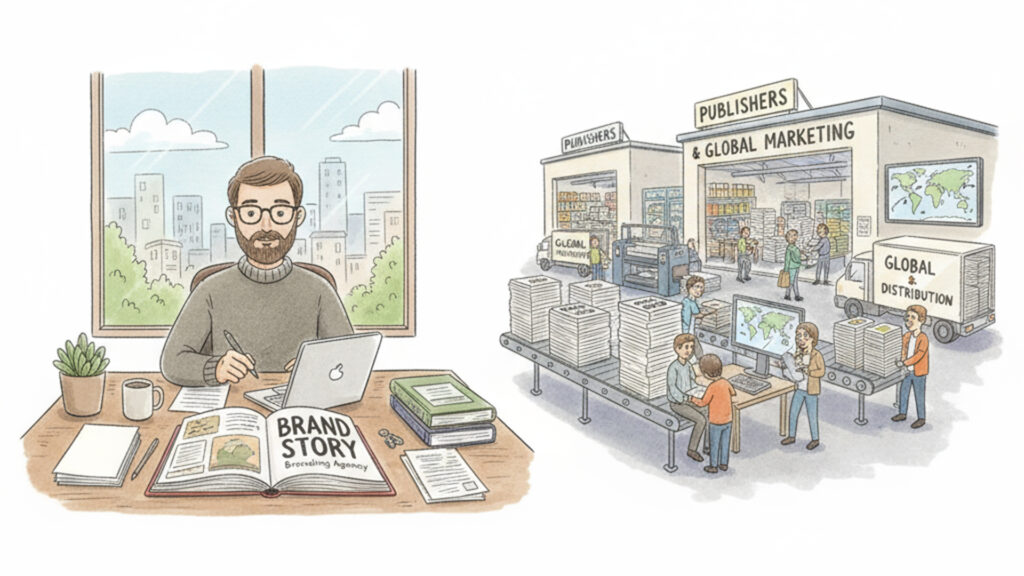
To simplify, a branding agency is the author who writes the story and defines the voice. A marketing agency is the publisher who distributes it and makes it a bestseller.
Branding Agency
“People don’t buy products, they buy brands.” – said David Ogilvy. And how right he was! A branding agency builds your identity, positioning, and personality. They help you answer the “who” and “why” of your business. What does that include?
- Building a brand’s nomenclature and visual identity
- Brand strategy and brand positioning
- Tone of voice, defining brand personality
- Building a brand book, sorting usage across various touchpoints like OOH & digital, mobile applications, web, on-ground, etc.
Marketing Agency
A marketing agency is about enabling and building compelling brand communication, stirring desire among consumers and driving brand persuasion. They answer the “how” and “where.” What do these marketing services include?
- Campaign creation and management (social media, print, digital, OOH)
- SEO, SEM, and content marketing, performance marketing
- Social media management
- Influencer and paid media campaigns
- Lead generation and conversion optimization
In a nutshell, the key differences are:
Branding
| Defines who you are and what you stand for |
| Long-term reputation and loyalty |
| Builds identity, values, and emotional connection |
| Naming, logo design, tone of voice |
| Results in equity and recognition |
| Measured by awareness, perception, loyalty |
| Continuous and holistic |
Marketing
| Promotes what you offer to the world |
| Short-term campaigns and goals |
| Drives leads, sales, and engagement |
| SEO, ads, influencer campaigns, content |
| Results in conversions and ROI |
| Measured by sales data, ROI, analytics |
| Tactical and time-bound |
Clutter-breaking Case studies & Examples
Zepto
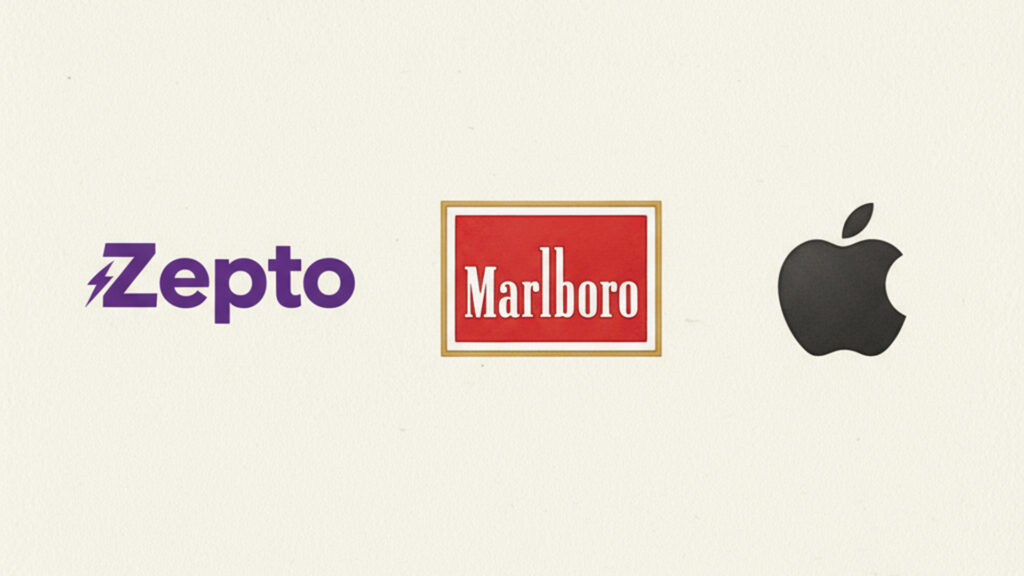
- Branding: When Stanford dropouts Aadit Palicha and Kaivalya Vohra launched Zepto, they knew they needed a brand name and identity that stood out in the crowded quick-commerce space. Landor & Fitch, a leading global brand consultancy, crafted the nomenclature Zepto, interestingly derived from zeptosecond—a physics term for the shortest measurable time on earth—signaling speed. Thus, riding on the promise of super fast deliveries. A bold magenta logo defines them, inspiring a futuristic appeal, while shaping a youthful personality that’s relatable to the urban and evolving generation.
- Marketing: Zepto’s Makkhan Chor campaign on Janmashtami gave customers blank butter packets with the line “Oops, Maakhan Chor got here before you! Amul butter delivered in 10 minutes, gone in seconds.” That wasn’t just a quirky idea—it was smart marketing built on their youthful, fun brand identity. Their cheeky notifications and meme marketing established their brand strongly. Branding made them memorable. Marketing made them viral.
Apple
- Branding: The name “Apple” was chosen by Steve Jobs for its simplicity and warmth—breaking away from the cold, technical-sounding names in tech (like IBM or Xerox). The half-bitten apple logo, designed by Rob Janoff, symbolized knowledge and approachability. The brand identity was never about specs but about creativity, innovation, and super ease of use.
- Marketing: Minimalist campaigns like Think Different and Shot on iPhone focused big on lifestyle directly and not technicalities. Apple’s 2024 Doodle iPad Pro campaign reinforced the creative DNA of the brand, showing how branding drives marketing strategy.
Marlboro
- Branding: Surprisingly, Marlboro began in the 1920s as a women’s cigarette brand with the tagline “Mild as May.” The rebrand in the 1950s changed everything. Its new cowboy logo and rugged visuals repositioned Marlboro as masculine, bold, and adventurous. The red chevron on the pack became iconic—simple, recognizable, and aggressive.
Marketing: The Marlboro Man campaign was one of the most successful in history, linking cigarettes with rugged masculinity and freedom. Despite health regulations, the brand equity built through this branding-marketing combo kept Marlboro the world’s top-selling cigarette brand for decades.
What Comes First—Branding or Marketing?
It’s tough to narrate a compelling brand story without a coherent name or a disruptive identity. Hence, effectively, branding is the first step towards introducing a brand to the world.. Imagine running a campaign without knowing your tone of voice, values, or target audience—it would be just pretty plastic visuals without anything to communicate.
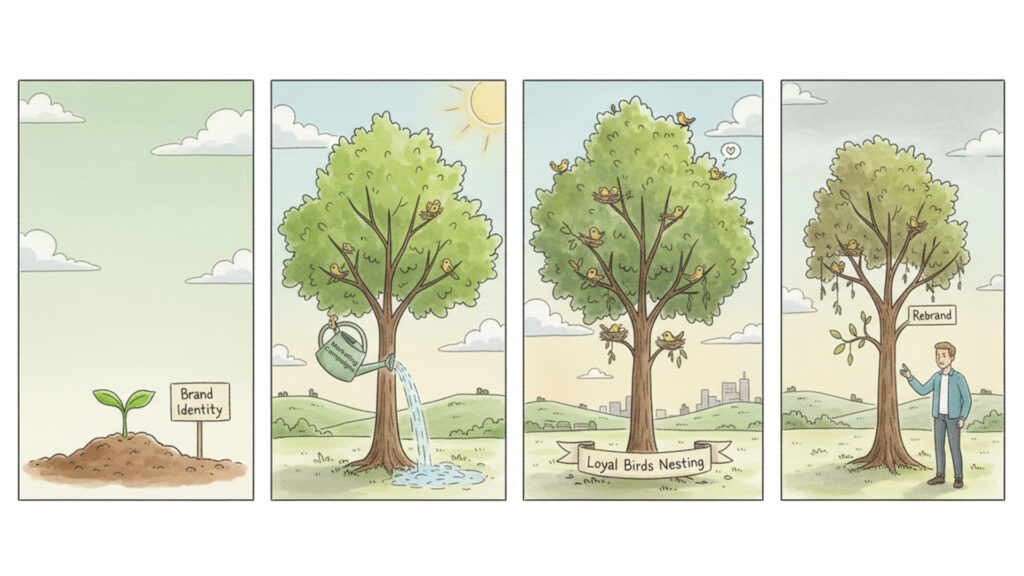
But branding isn’t a one‑time setup. It lays the foundation. Once established, marketing builds upon and animates that foundation. As a business progresses through the stages of the Product Life Cycle (introduction → growth → maturity → decline), the roles of branding and marketing shift, adapt, but always remain complementary.
How branding leads the cycle:
- Introduction Stage: Branding is crucial here. You’re defining your identity, positioning, and values—answering who you are and why you matter. Marketing focuses on awareness-building campaigns that introduce your brand to the market.
- Growth Stage: Marketing takes center stage with aggressive campaigns to capture market share, while branding continues to ensure consistency and differentiation.
- Maturity Stage: Branding ensures loyalty and trust, while marketing works to sustain interest through innovation, discounts, or seasonal pushes. This is also where rebranding or refreshes sometimes occur to stay relevant.
Decline Stage: Rebranding may become necessary to reposition the business, while marketing may scale down or pivot to niche audiences. For example, many legacy FMCG brands in India have rebranded packaging to stay relevant and appeal to Gen Z while doubling up on authenticity and cutting back on mass campaigns.
Branding and marketing are two crucial sides of the same coin.
Branding is strategy, and marketing is execution. Branding defines your company’s soul, while marketing gives it a voice. Without branding, marketing lacks depth; without marketing, branding goes unseen. The secret lies in knowing when to use each and how to keep them in balance.
As Jeff Bezos put it: “Your brand is what people say about you when you’re not in the room.”
When branding and marketing work hand in hand, they spark the conversations that keep your business alive.
Often, startups, small businesses, dynamic homegrown brands don’t have the time or budget for a scattered approach. Working with multiple agencies for branding, marketing, and execution leads to inefficiencies and diluted impact. Much like, one brand owning five different stories and projections.
At Monkey Wrench, Kolkata, we simplify the chaos. As a 360° advertising agency, we make that full spectrum happen. From building brand nomenclatures and identity design to conceptualising campaign executions and building performance marketing strategies, our strategic marketing consultants align every touchpoint to deliver cohesive, high-impact outcomes.
Let’s grow your brand from seed to scale—with clarity, creativity, and consistency. Because building something memorable starts with getting the foundation right.