




AI in Packaging Design India | The Creative Shift Is Here
Dec 1, 2025
In India, the expectations placed on packaging design are shaped by two dominant consumer groups. On one side, we have value-conscious and convenience-seeking buyers who prioritise clarity, affordability, and everyday functionality. They look for ease of use, straightforward information, and packaging that helps them make quick, confident decisions. On the other side, we have the premium, aspirational segment that reads packaging as a marker of taste and status, seeking refined aesthetics, luxurious finishes, and design that elevates the product experience itself.
Balancing these distinctly Indian expectations demands a thoughtful visual hierarchy, which for years has been guided by the 10 ft, 5 ft, and 2 ft packaging design theory. From a distance of 10 ft, colour and shape must catch attention in a crowded aisle, especially in India’s vibrant retail landscapes. At 5 ft, brand identity and imagery need to be instantly recognisable so the shopper can locate their preferred brand amidst dozens of competitors. Finally, at 2 ft, the consumer evaluates details such as ingredients, instructions, benefits, flavour cues, or usage information before placing the product in their basket. This layered approach has long shaped packaging decisions in the country, helping brands communicate efficiently in kirana stores, modern trade shelves, and e-commerce thumbnails alike. Today, artificial intelligence is rewriting this journey. What once took months of trial, testing, and revision is now unfolding in days, sometimes hours, as AI reshapes how brands conceptualise, design, produce, and deploy packaging.With global AI in packaging projected to grow from USD 2,021.3 million in 2022 to USD 5,375.28 million by 2032 at a CAGR of 10.28% (Towards Packaging, 2024), its influence is already visible in India’s FMCG, pharmaceutical, personal care, and even traditional craft sectors. AI is not simply streamlining operations; it is elevating packaging into a responsive and intelligent ecosystem.
1. A New Depth of Consumer Understanding
Then: Traditionally, packaging strategy started with market research, competitor benchmarking, and guesswork. Designers and brand teams would pore over trend reports and brainstorm in workshops – but often with limited data-driven insight, relying on past experience, gut feelings, and focus groups.
Now with AI:
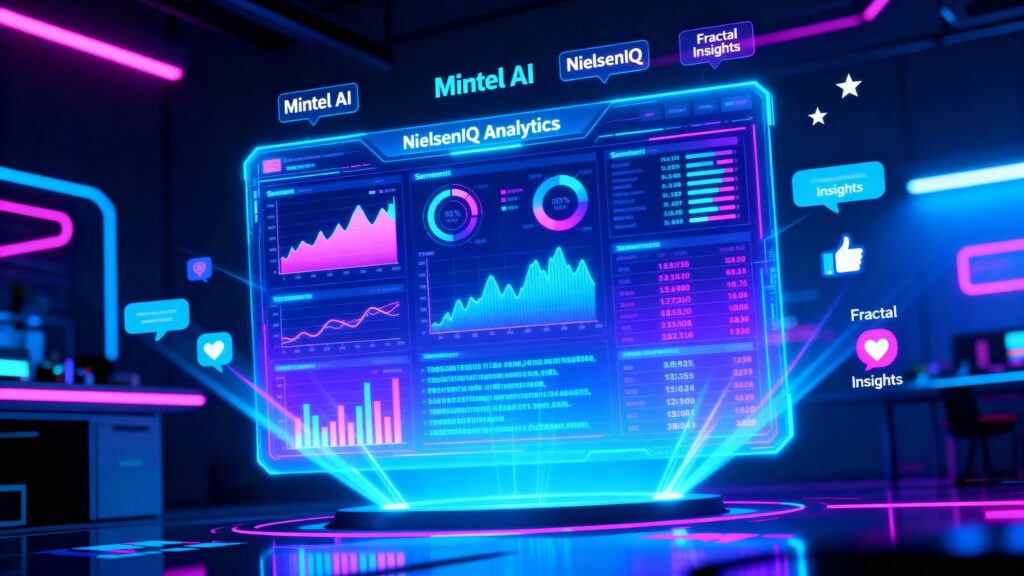
- Predictive analytics powered by AI has changed this research phase. Tools such as Mintel AI, NielsenIQ Analytics, and Fractal’s consumer modelling platforms now scan millions of digital interactions, reviews, and behavioural signals to reveal what resonates with consumers. This real-time intelligence is reshaping packaging briefs. Instead of designing for broad assumptions, brands now design for granular needs.
- Using sentiment analysis, AI can scan online reviews or social channels to uncover how consumers feel about competitor packaging or potential new directions.
Impact: This stage shift reduces risk in ideation; instead of launching blindly, packaging teams can align their creative direction with quantitatively backed consumer insight.
2. Generative Design and Creativity Without Limits
Then: Designers sketched mock-ups by hand or in CAD, iterated slowly, and often produced many unused concepts. Structural design and optimisation required repeated trial and error, and prototyping was expensive in time and material.
Now with AI:
- Generative design AI algorithms (e.g., Autodesk Generative Design, Dassault Systèmes’ platform) allow designers to define constraints such as materials, dimensions, strength, and sustainability goals, and then let the system propose hundreds of structural designs.
- AI-powered simulation and topology optimisation tools can instantly test designs for stress, durability, material usage, and drop performance.
- Designers also use Adobe Sensei, or other AI suites, to generate graphic layouts, iterate branding elements, and personalise design variants.
Impact: Generative AI slashes the time from concept to viable structural design, reduces waste by avoiding over-prototyping, and gives designers unexpected yet optimised solutions.
3. 3D Visualisation and Prototyping: Reducing Waste and Time
Then: After concepting, teams printed physical prototypes, often via traditional methods or 3D printing. This was time-consuming, material-intensive, and costly. Testing for usability (how the package opens, how the product pours) happened late in the process.
Now with AI:
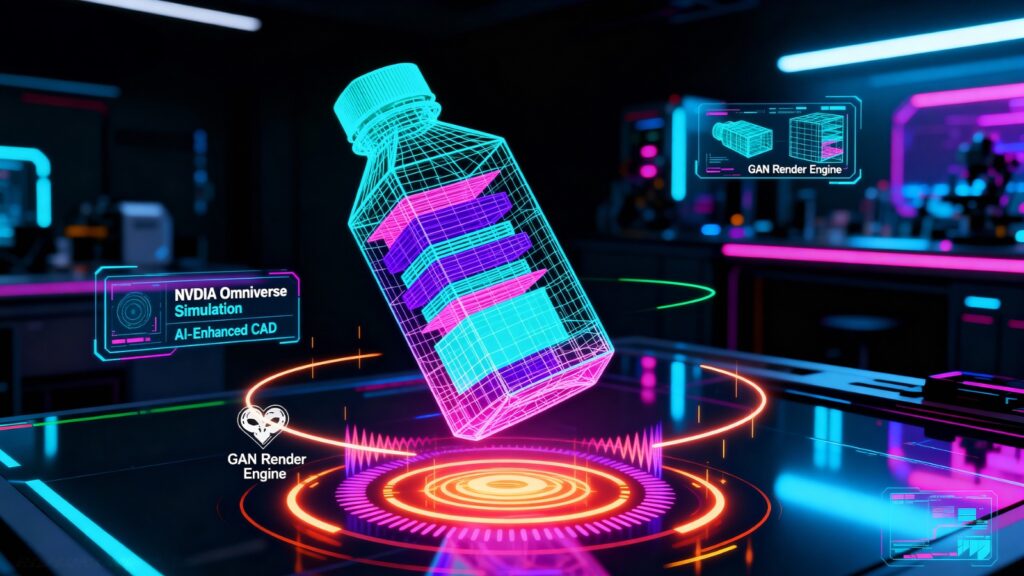
- AI supports 3D modelling and virtual prototyping using tools like NVIDIA Omniverse, or AI-augmented CAD platforms, letting designers visualise structural changes in real time.
- Computer vision and AI-driven physics engines simulate how packaging will behave under pressure, during transport, or when dropped.
- Generative adversarial networks (GANs) help produce photorealistic renders and packaging mock-ups without physically creating them.
Impact: Virtual prototyping accelerates validation, reduces material waste, and detects structural flaws before production, thus saving cost and time
4. Smarter Production & Quality Control
Then: Quality inspection was largely manual, reliant on human inspectors spotting defects in printed labels, improper folding, or misaligned cuts. Errors crept in, wastage increased, and inspection was a major bottleneck.
Now with AI:
- Computer vision systems, powered by convolutional neural networks (CNNs), inspect packaging at high speed. Tools like Clarifai, Google Vision AI, or in-house vision models can detect printing defects, misprints, misalignments, and even micro-tears.
- AI-driven predictive maintenance analyses sensor data to predict when machinery needs servicing, reducing downtime and preventing production bottlenecks.
- Robotic arms guided by deep learning (e.g., using Mask R-CNN) automatically feed, cut, fold, or assemble packaging, reacting in real time to variations.
Impact: AI ensures higher consistency, reduces defect-related wastage, streamlines operations, and optimises maintenance schedules.
5. Material Innovation and Sustainability Optimisation
Then: Material selection was often based on supplier catalogues, industry standards, or past experiences. Designers had to balance cost, durability, and eco-friendliness, but optimising for all three was manual and imprecise.
Now with AI:
- AI algorithms use sustainability optimisation tools (e.g., AI for life-cycle assessment) to recommend materials that reduce environmental impact.
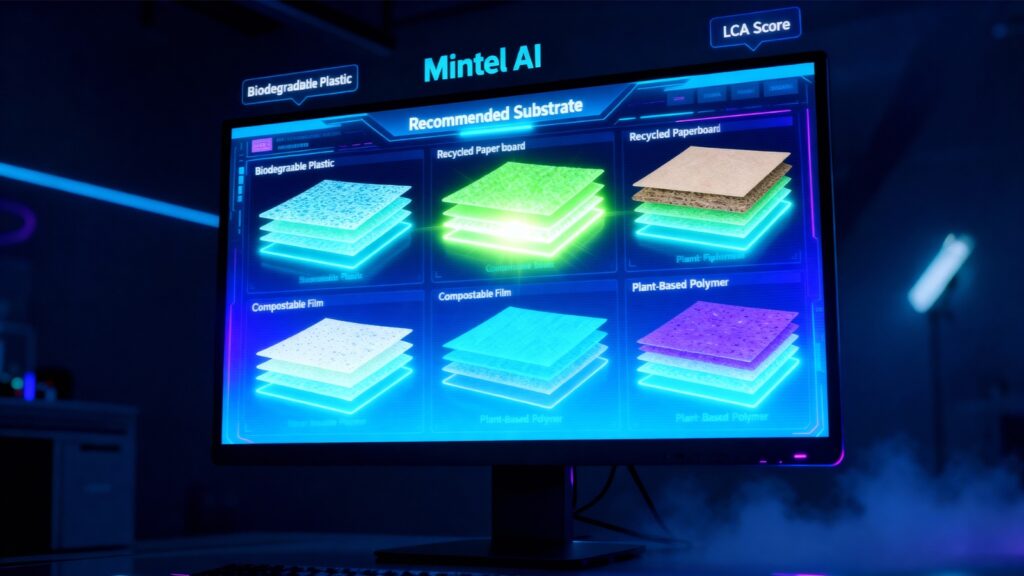
- By analysing production data and life-cycle emissions, AI can suggest alternative substrates (biodegradable plastics, recycled paperboard) that meet both performance and sustainability goals.
- Machine learning models track and predict material supply constraints, cost fluctuations, and recycling potential.
Impact: AI-guided material choices help companies meet sustainability targets, reduce waste, and innovate more eco-conscious packaging — much more precisely than traditional methods.
6. Supply Chain & Logistics Optimisation
Then: Packaging logistics planning, including how to ship, store, and distribute packaged products, was often based on heuristic rules or planners’ experience. Forecasting demand, optimising pallet layouts, and predicting material needs were slower and less precise.
Now with AI:
- Predictive demand forecasting models use time-series machine learning to predict inventory needs, helping balance overproduction and stockouts.
- AI-driven package structure recognition via computer vision (e.g., instance segmentation) recognises packaging units in real-world logistics environments for automated sorting.
- AI planning tools optimise pallet and container packing, routing, and transport modes to minimize cost and carbon emissions.
Impact: AI makes the supply chain smarter, leaner, and greener — enabling just-in-time production, reducing waste, and cutting logistics costs.
7. Shelf Presentation & Consumer Interaction
Then: Packaging designers relied on static mock-ups or photo shoots to evaluate how their product would look on shelves. Consumer engagement was limited to focus groups or in-store trials.
Now with AI:
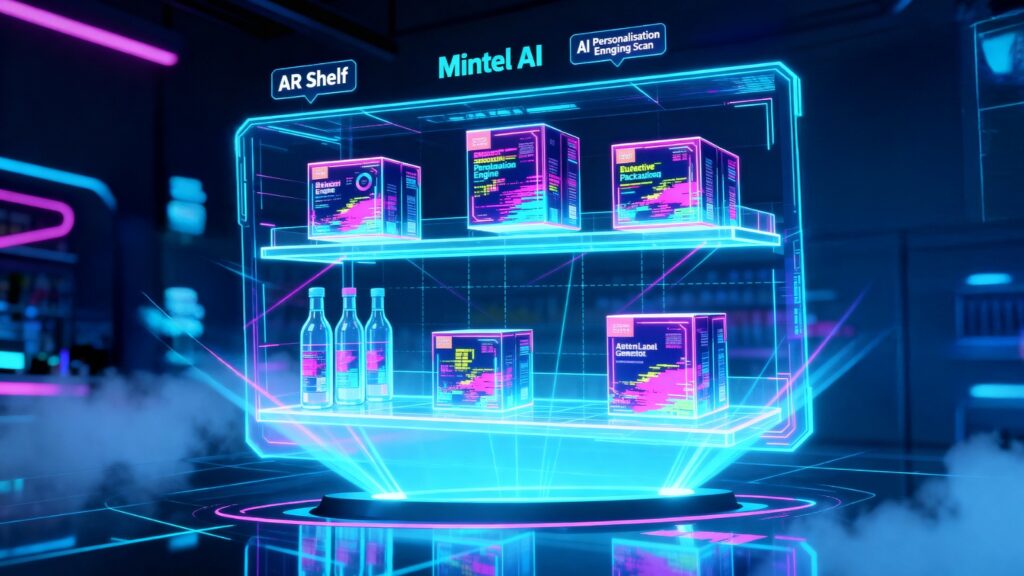
- AI integrates with Augmented Reality (AR) and Interactive Packaging: using tools such as Unity + ML-agents, or AR platforms, brands can simulate how packaging will appear on shelf, in lighting, or in different retail settings.
- Personalisation engines, powered by AI (e.g., using algorithms similar to OpenAI or custom ML models), allow mass customisation: brands can produce limited-edition designs or region-specific labels at scale.
- AI-powered computer vision on smartphones targets consumer engagement: scanning packaging can trigger AR experiences, product origin stories, or recycling instructions.
Impact: AI enriches the shelf experience, strengthens brand-consumer interaction, and enables personalisation without massively raising costs.
8. Post-Execution Feedback & Continuous Improvement
Then: Post-launch feedback came through sales reports, customer reviews, and occasional surveys. But analysing design performance at scale was slow and retrospective.
Now with AI:
- Sentiment analysis and natural language processing (NLP) tools (such as IBM Watson Natural Language, Google Cloud Natural Language) monitor consumer reviews, unboxing videos, social media buzz, and feedback to assess how packaging is being perceived.
- Computer vision on social media images can analyse how customers display or reuse packaging (for instance, in upcycling), offering insights into design impact.
- AI-powered optimisation feedback loops can feed this data back into generative design systems, letting designers refine future iterations based on real-world user behaviour.
Impact: AI closes the loop between shelf and strategy, enabling brands to learn from real-world use and continuously improve their packaging designs.
No Two Boxes Tell the Same Story.
Packaging design keeps evolving with every generation, yet its core remains unchanged. Utility and readability still anchor great packaging because it is, at its heart, an art form with purpose. As a packaging design agency in Kolkata, we have been the quiet sailor on this journey, experiencing every shift and adapting to them for over 25 years.
From hand-drawn layouts to 3D prototypes, we have lived each phase closely and understood the pulse of what works. What we have learned is simple. The true magic lies in blending the old with the new, intuition with data, craftsmanship with technology. This mix and match brings out the best in packaging design.
If you want to begin a journey with us and create packaging that speaks, connects, and stays memorable, then let us sail together.
Next Story
Creative Packaging Cuts and Structures That Make Products
Dec 8, 2025
In India, the expectations placed on packaging design are shaped by two dominant consumer groups. On one side, we have value-conscious and convenience-seeking buyers who prioritise clarity, affordability, and everyday…
Read More
